

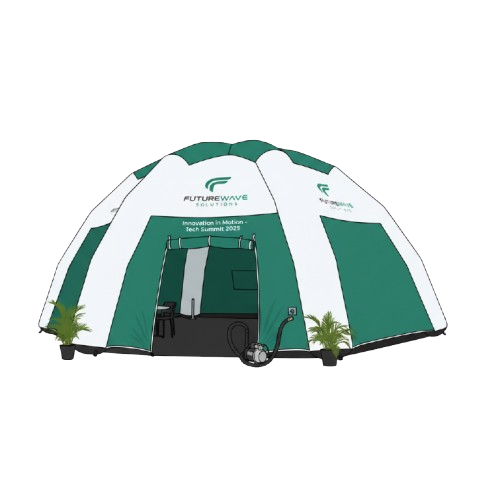
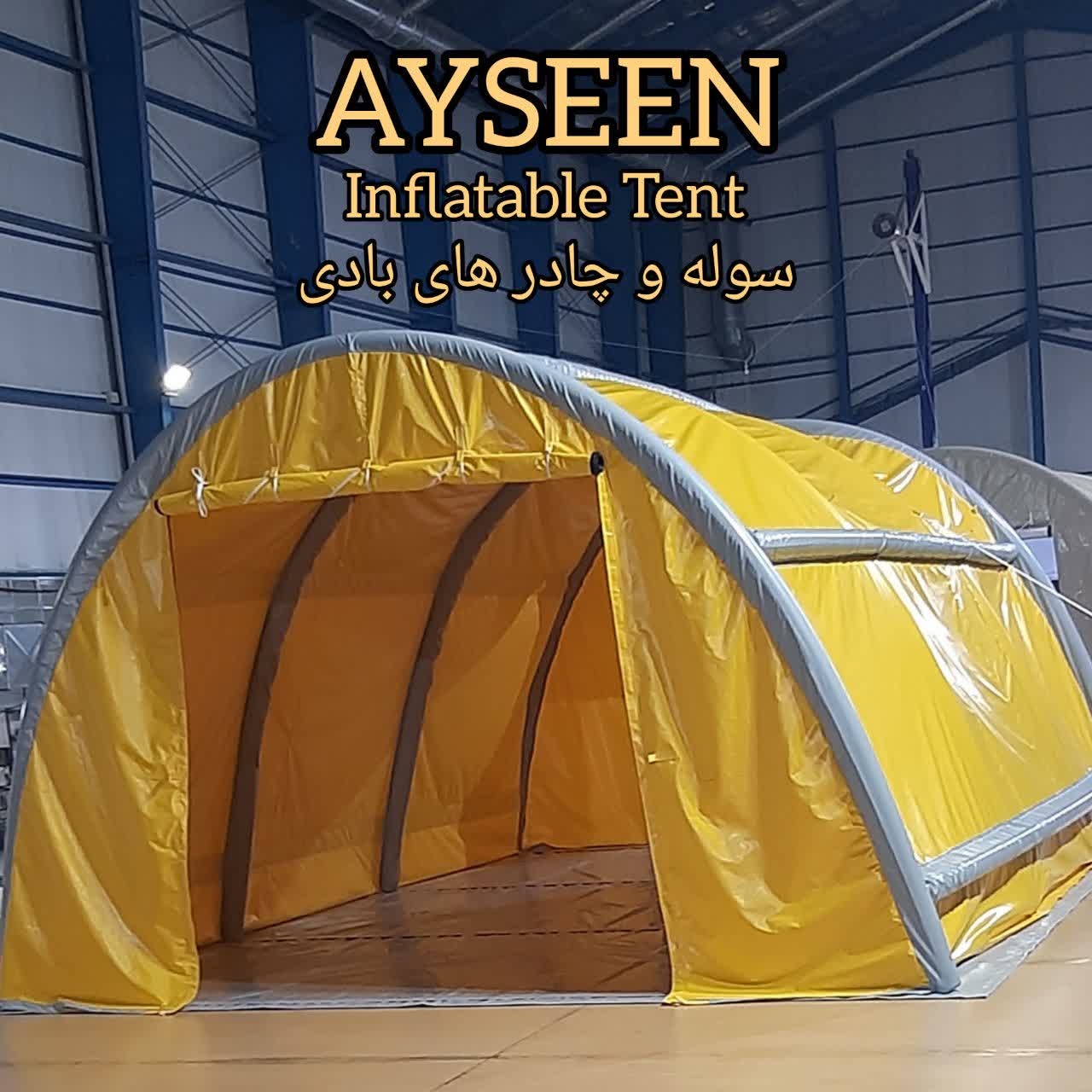






Imen Etesal Pasargad Knowledge-Based Company (Danesh Bonyan), with an engineering and knowledge-oriented foundation, has been active for over two decades in the design and production of industrial equipment and aerial and inflatable structures. The company is prepared to engage and participate in the design, production, and market sectors for related products.
Ayseen offers free consultation to help clients make the best choice based on their specific needs. Our expert team is ready to provide precise and technical guidance on selecting the appropriate type, size, and application for camping and crisis tents. This service allows you to make decisions with full information and complete confidence, ensuring you achieve the best outcome from your purchase.
Here are some questions you may have. Should any questions or ambiguities arise, you can call us or contact us through our social media channels.
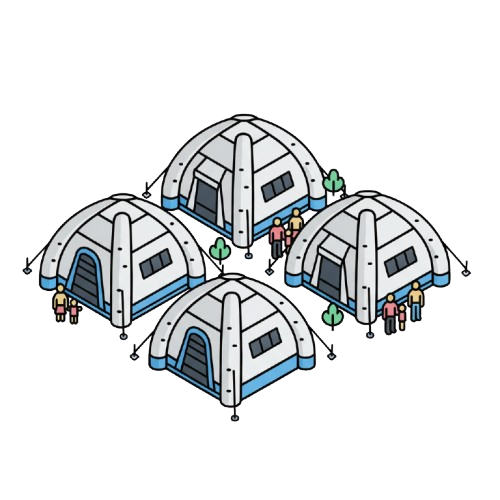
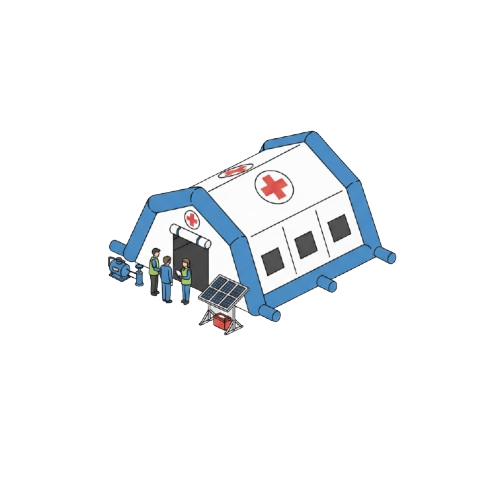
Inflatable tents are manufactured using multi-layered PVC or reinforced TPU fabrics, providing high resistance against tension, wind, and moisture. With proper use, their lifespan is between 5 to 10 years. Furthermore, in all models, sensitive areas (such as seams and connections) undergo heat welding or industrial stitching to prevent air leakage. Should minor damage occur, it is repairable in under 10 minutes using the emergency repair kit provided with the product.
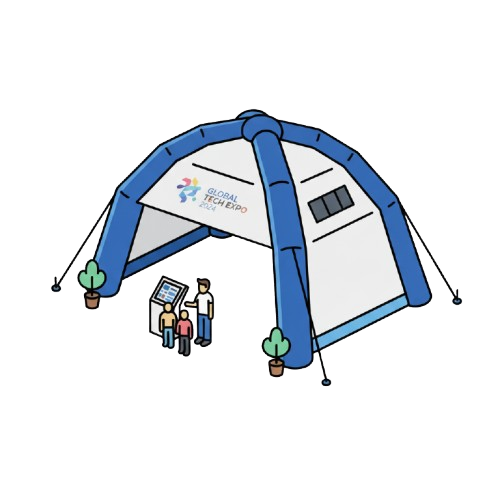
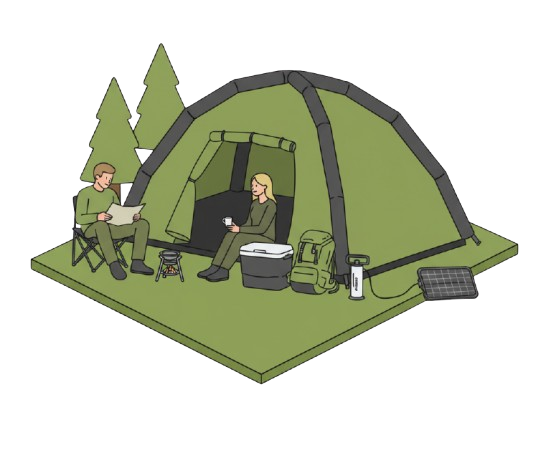
Unlike structured or metal-frame tents, inflatable models can be set up in just 3 to 5 minutes using only an electric or manual pump. No special tools or expert labor are required. When done, simply opening the air valve allows the air to escape, and the tent folds neatly into a small carry bag. This installation speed is a significant advantage for exhibitions, mobile camps, or crisis situations.
Inflatable tents differ from conventional tents in terms of design and material. The main body is constructed from industrial fabrics with UV-proof and flame-retardant coatings, and the inflatable structure requires precise molding and specialized welding. Consequently, the initial cost is higher. However, since they do not require a metal frame or specialized assembly labor, their long-term maintenance and transportation costs are significantly lower. In essence, these tents are for those seeking high durability and rapid setup, not merely the lowest price.
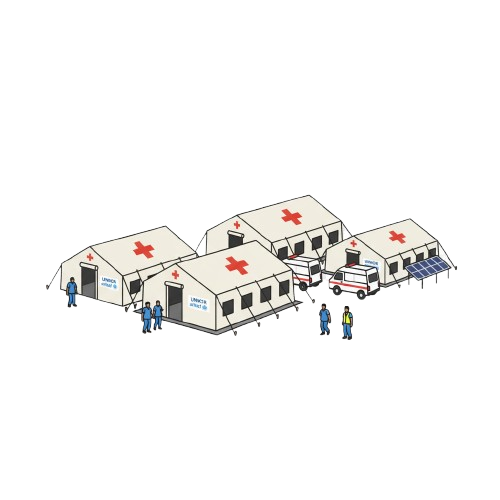
To estimate the capacity of relief or temporary shelter tents, we typically use international standards or guidelines from humanitarian organizations such as UNHCR, IFRC, or the Sphere Project.
Minimum Shelter Space Per Person (Sleeping):
3.5 to 4.5 sqm in emergency situations
(Up to 5 sqm is recommended in more stable conditions)
Seating or Gathering Space (Meetings, Treatment, Waiting):
Approximately 1.2 to 1.5 sqm per person
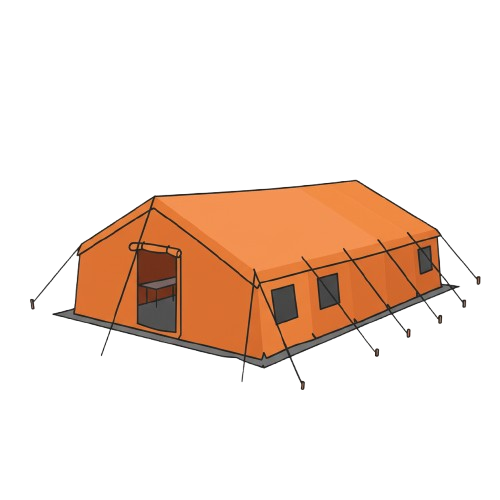
For family or group tents, 40 sqm tents are typically designed to accommodate 5 to 8 small families or 20 sleeping individuals.
According to the Sphere Standard:
Sleeping Accommodation:
If we consider approximately 2 sqm per person (in a compressed layout),
Capacity: Approximately 20 sleeping individuals
Seating (Meetings, Treatment, Waiting):
If we consider approximately 1.3 sqm per person,
Capacity: Approximately 30 seated individuals
These figures are completely logical and justifiable, provided the tent has a rectangular design, adequate height, and no bulky equipment inside.
Collaboration with governmental bodies and NGOs in supplying emergency shelter tents
Every product is supplied with drawings, a technical specifications table, and an installation guide.
Ability to design dimensions, color, logo, and accessories for each project.
Your inflatable tents can be set up in under a few minutes and require no special tools.
Use of materials resistant to UV, moisture, and harsh environmental conditions.
Our team is available to provide support, training, and repair services